

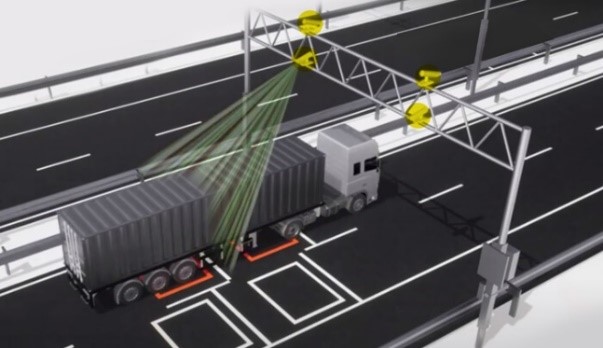
WIM scales on SH1 at Bombay Hills: why fleets are paying attention
If your trucks run the Auckland, Waikato corridor, you already know the Bombay Hills stretch of State Highway 1 (SH1) is a key pinch point for freight. It’s also becoming a focal point for modern heavy vehicle compliance, as Waka Kotahi NZ Transport Agency continues rolling out the Commercial Vehicle Safety Programme (CVSP) a national network that combines in‑road weigh‑in‑motion (WIM) scales, number plate recognition cameras, and safety centres to screen heavy vehicles and identify potential non‑compliance.
At Bombay, a new Commercial Vehicle Safety Centre (CVSC) is under construction and is expected to become operational in 2026, with government recruitment material indicating an operational target of April 2026.
In the lead‑up, Waka Kotahi has also published traffic bulletins showing WIM equipment and electronic signs (VMS) being installed around Bombay (including Great South Road) as part of the CVSP screening approach.
Meanwhile, industry reporting points to WIM systems installed on SH1 near the Bombay Hills area in both northbound and southbound lanes, feeding into the broader screening and compliance workflow associated with the Bombay CVSC.
The practical takeaway for fleet owners is simple:
-
You can be selected for compliance checks based on axle and axle‑group weight signals, not just total gross weight, and
-
The cost of getting it wrong can stack fast because NZ law treats axles and axle groups as separate offences.
How WIM (Weigh‑In‑Motion) systems work on SH1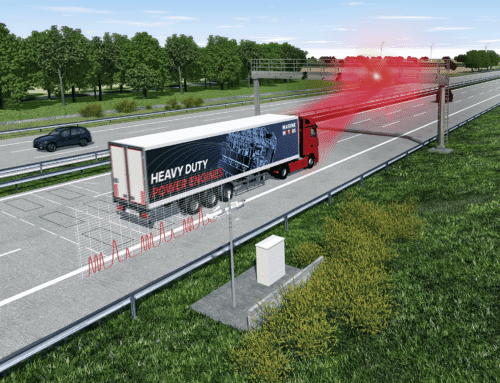
A modern WIM setup is designed to “weigh” a vehicle while it’s moving, without requiring it to stop. In general terms, WIM sites use:
-
Road‑embedded sensors (installed across the lane) that measure dynamic wheel/axle loads as each axle passes over
-
Vehicle detection and classification (often using loops and/or additional sensors to determine axle count and spacing)
-
Cameras and software that capture and link a passing vehicle to a plate record, typically via automatic number plate recognition (ANPR)
-
Backend screening that checks measured weight patterns (including axle and axle‑group estimates) and other risk/compliance indicators against relevant data sources and rules—then decides whether the vehicle should be diverted for inspection
Waka Kotahi describes the programme as using roadside technology and intelligent software to screen vehicles and direct potentially non‑compliant heavy vehicles into safety centres, helping compliant operators continue without unnecessary interruption.
Why WIM focuses so heavily on axle groups
For infrastructure and safety, how weight is distributed matters as much as the total. A truck can be under legal gross mass but still overload a steer axle, drive tandem, or trailer tri‑axle group especially with poor load placement, uneven loading, or suspension differences between units.
That’s exactly why WIM sites target axle and axle‑group patterns: they’re strong indicators of real‑world road wear and non‑compliance risk.
WIM is screening your legal weight is confirmed on a weighbridge
A key point that gets misunderstood: WIM is typically used as a screening/pre‑selection tool. The compliance action happens when a vehicle is directed into a CVSC, where it can be weighed on a weighbridge and checked for additional compliance items.
Waka Kotahi traffic bulletins explaining CVSC operations note that once at the CVSC, vehicles drive over a weighbridge and may undergo compliance checks such as road user charges (RUC), logbooks, or safety inspections.
They also note CVSCs are operated by NZ Police and support enforcement activity across the network.
So, in practice, the compliance chain looks like this:
WIM (in‑road) → ANPR identifies vehicle → system flags risk → sign directs vehicle → weighbridge confirms → infringement/prosecution if overweight.
Overloading penalties in NZ: fines can apply per axle and per axle group
Here’s the part that hits the bottom line.
Under section 43 of the Land Transport Act 1998, separate overloading offences can be committed for every axle, axle set, group of axles, and the total number of axles if mass limits are exceeded.
That means a single bad load can trigger multiple offences especially if you’ve overloaded, for example:
-
a steer axle, and
-
a drive axle set, and
-
a trailer axle group
Infringement fees for axle overloads (Table 1)
The Land Transport (Offences and Penalties) Regulations 1999 set infringement fee scales. For overloading on any individual axle (Table 1), the fees are:
| Amount overweight (per axle) | Infringement fee (NZD) |
|---|---|
| Not more than 500 kg | $350 |
| > 500 to 1,000 kg | $600 |
| > 1,000 to 1,500 kg | $1,050 |
| > 1,500 to 2,000 kg | $1,650 |
| > 2,000 to 2,500 kg | $2,250 |
| > 2,500 to 3,000 kg | $2,850 |
| > 3,000 to 3,500 kg | $3,450 |
| > 3,500 to 4,000 kg | $4,050 |
| > 4,000 to 4,500 kg | $4,650 |
| > 4,500 to 5,000 kg | $5,250 |
| > 5,000 to 5,500 kg | $5,850 |
| > 5,500 to 6,000 kg | $6,450 |
| > 6,000 to 6,500 kg | $7,050 |
| More than 6,500 kg | $10,000 |
Infringement fees for axle‑group overloads (Table 2)
For two or more consecutive axles (what most operators call an axle group), the fees (Table 2) are:
| Amount overweight (per axle group) | Infringement fee (NZD) |
|---|---|
| Not more than 1,000 kg | $350 |
| > 1,000 to 2,000 kg | $600 |
| > 2,000 to 3,000 kg | $1,050 |
| > 3,000 to 4,000 kg | $1,650 |
| > 4,000 to 5,000 kg | $2,250 |
| > 5,000 to 6,000 kg | $2,850 |
| > 6,000 to 7,000 kg | $3,450 |
| > 7,000 to 8,000 kg | $4,050 |
| > 8,000 to 9,000 kg | $4,650 |
| > 9,000 to 10,000 kg | $5,250 |
| > 10,000 to 11,000 kg | $5,850 |
| > 11,000 to 12,000 kg | $6,450 |
| > 12,000 to 13,000 kg | $7,050 |
| More than 13,000 kg | $10,000 |
A note on weighing tolerances (still not a “buffer”)
NZ regulations also specify weighing tolerances reductions applied to measured mass in certain circumstances (for example, 0.5 tonnes for any mass measured on any axle, and other tolerance amounts for axle sets, total axle mass, and gross vehicle mass).
It’s important not to treat tolerances like “extra payload allowance.” The most reliable cost control strategy is to load clearly within legal axle and axle‑group limits because WIM screening + weighbridge confirmation is designed to catch the outliers.
Why “axle group overload” fines happen even when gross weight looks fine
Fleet managers often get caught by one of these realities:
-
Palletised freight loaded slightly too far forward can overload a steer axle
-
Bulk loads can settle during transport and shift weight toward a particular axle set
-
Tipper bodies can load unevenly (especially on unlevel ground)
-
Trailer axle groups can carry more than expected when coupling geometry or suspension settings change
-
Air suspension vs spring suspension reacts differently during loading and on uneven yards
WIM doesn’t care that your “total weight feels about right.” It’s looking at the pattern and if an axle group is high, you’re a candidate for diversion and confirmation at a weighbridge.
The cost‑effective fix: Loadsense onboard weighing that shows axle‑group weights in real time
This is where onboard weighing becomes more than a nice‑to‑have. If your trucks and trailers can display axle group weights at the time of loading, you can correct weight distribution before you hit SH1—and before the WIM site at Bombay Hills has a reason to flag you.
What Loadsense onboard scales are built to do
Loadsense describes its All‑in‑One onboard scale solution as a system for trucks and trailers that works across suspension types and provides axle group weighing, along with net and gross values for truck and trailer.
In other words, it’s designed for the exact compliance problem WIM sites expose: knowing what each axle group is carrying, not guessing.
How it works on both air and mechanical suspension fleets
For air suspension trucks and trailers:
Loadsense provides onboard monitoring using sensors suited to air bag systems, including wired and wireless approaches intended to deliver axle group weight visibility.
For mechanical spring suspension trucks and trailers:
Loadsense systems support multiple sensor types (including options such as strain gauges and other sensor approaches) that can be configured to provide axle group data on spring setups—critical for fleets running mixed gear (some air, some steel).
Real‑world loading advantage: driver + loader see the same axle weights
Loadsense’s integrator/app approach is specifically aimed at making the loading process smarter. The product information describes a scale integrator transmitting real‑time weight info to a mobile phone via Bluetooth, and the ability to share data so the load can be positioned correctly over axle groups.
That matters because many overload events happen at the loader—not out on the highway. If the loader operator can see steer/drive/trailer group weights changing live, they can adjust placement immediately.
Where to find it
If you’re researching onboard axle group weighing systems for trucks and trailers, start here: loadsensescales.com
A practical “Bombay Hills ready” loading workflow for fleets
Here’s a simple process fleets use to reduce WIM risk and prevent axle group overload fines:
-
Tare/zero the system before loading (or confirm last calibration/zero procedure)
-
Set targets per axle group, not just gross (steer, drives, trailer groups)
-
Load in stages, checking axle groups after each stage
-
Correct with placement, not guesswork (move a pallet, shift the bin, change position)
-
Confirm final axle group weights before leaving the yard
-
Train dispatch + drivers on which axle groups commonly overload for each body/trailer type
-
Keep records (especially if you run permits, multi-drop routes, or variable freight densities)
With WIM screening operating continuously in the network, “we’ll fix it later” is where fines and downtime start.
Bottom line: WIM at Bombay Hills rewards compliant fleets and exposes guesswork
The SH1 Bombay Hills WIM approach is part of a broader shift: compliance is increasingly technology‑assisted, always‑on, and focused on axle and axle‑group distribution, not just gross weight.
And because NZ law can treat each axle and axle group as a separate offence, the financial risk isn’t only the top-line fine it’s the way multiple penalties can stack, alongside delays and operational disruption.
If you want the most cost‑effective path to staying off the wrong side of the weighbridge, onboard axle group weighing is the leverage point especially for mixed fleets running mechanical spring and air suspension trucks and trailers.
Loadsense’s pitch is straightforward: real‑time axle group weights, at the moment you can still do something about them during loading.